
Where can I park? Free spaces in every car park, before you drive into town
Drivers circle the centre looking for a space while a car park on the edge of town has room to spare. Here is how the city shows them where the room is, before they set off.
Tomislav Krnic
Founder of the smart city project CityX · 3 min read
Saturday morning, a driver heads into the centre of town. The sign at the first car park says full. So does the second. The car keeps circling, while a large car park on the edge of town has room to spare. The signs at the entrances tell the truth, but only once the driver is already in front of them.
The free spaces were there all along. The driver simply did not know where they were before setting off.
Free spaces, by part of the city
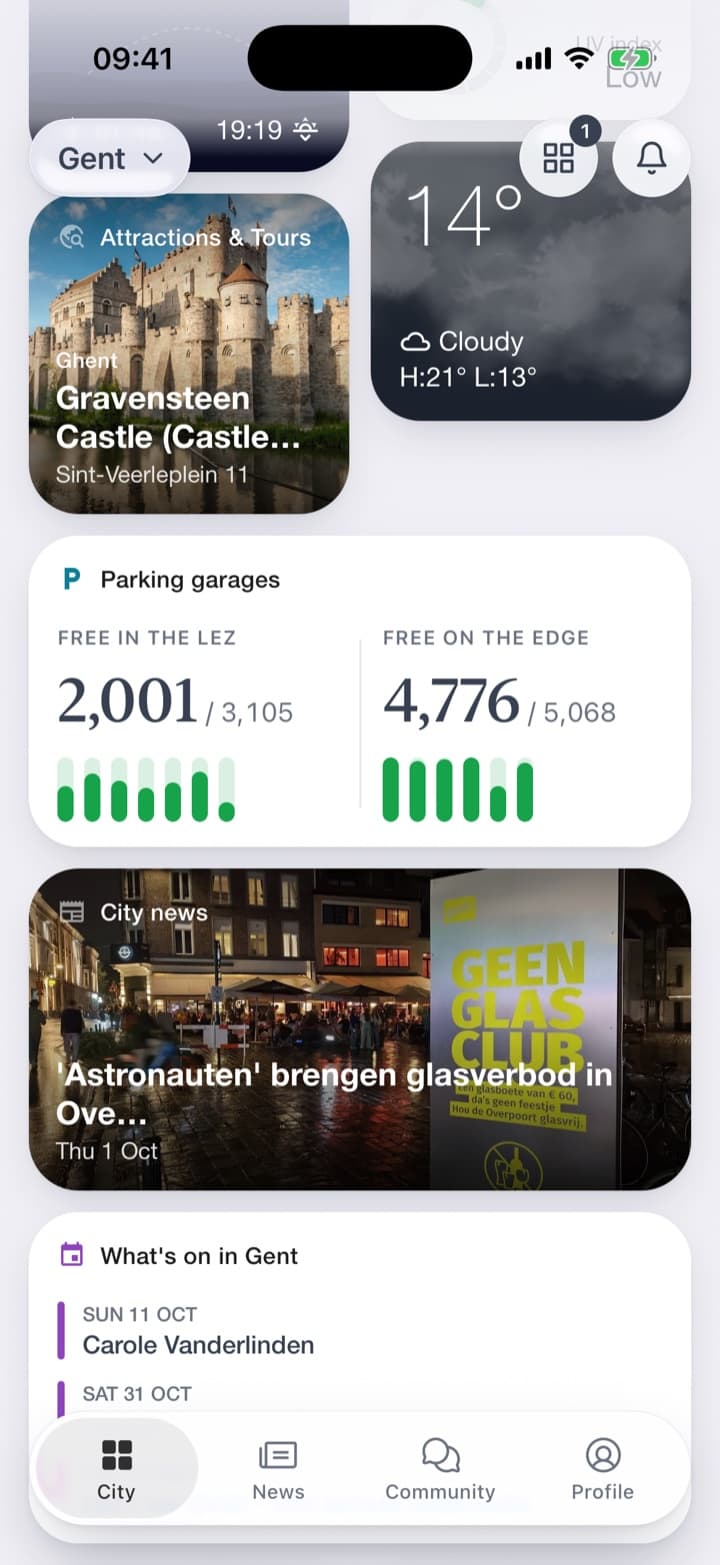
The Parking garages service in the CityX app puts those free spaces on the home screen, always current. The tile shows two parts of the city side by side: the centre, and the edge with the park-and-ride sites. Under each figure stands a small bar for every car park.
That split is what the driver's decision turns on. A single total for the whole city would promise plenty of room while the centre fills up, because much of the room is on the edge. Side by side, the driver sees at once whether to head for the centre or leave the car outside the ring and go on by public transport.
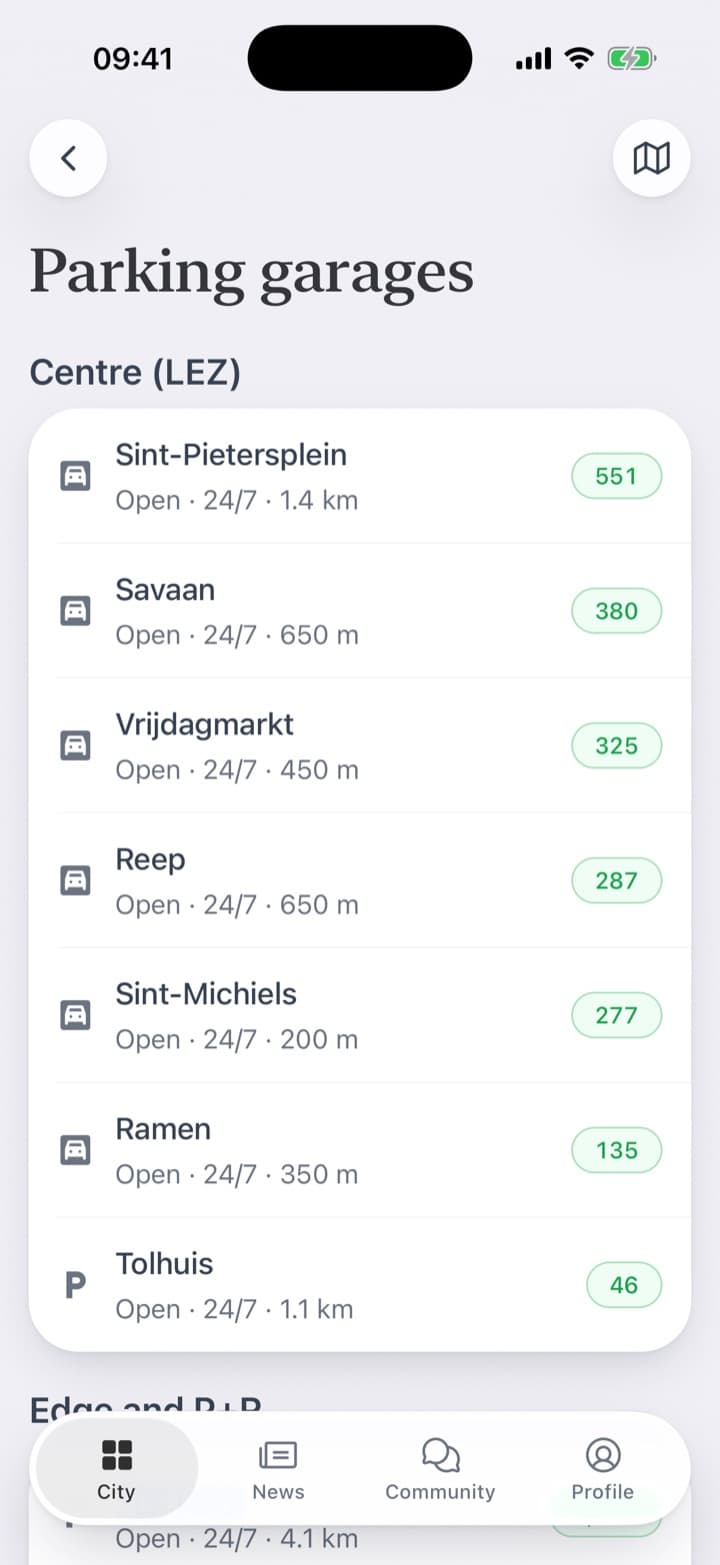
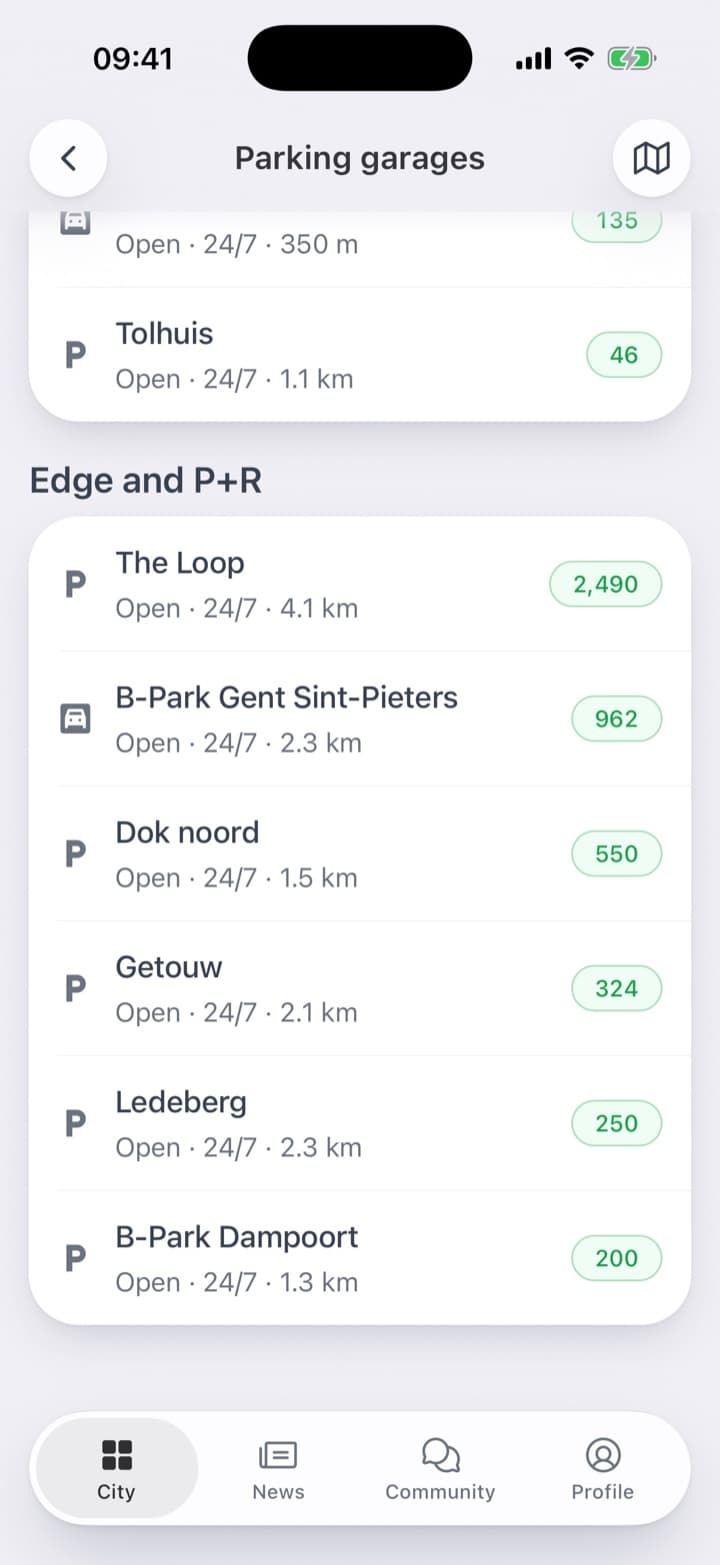
Behind the tile is the list, split the same way: every car park with its free spaces, its opening hours and how far away it is. Each one also says whether it is open, so nobody drives to a closed car park.
On the map and in detail
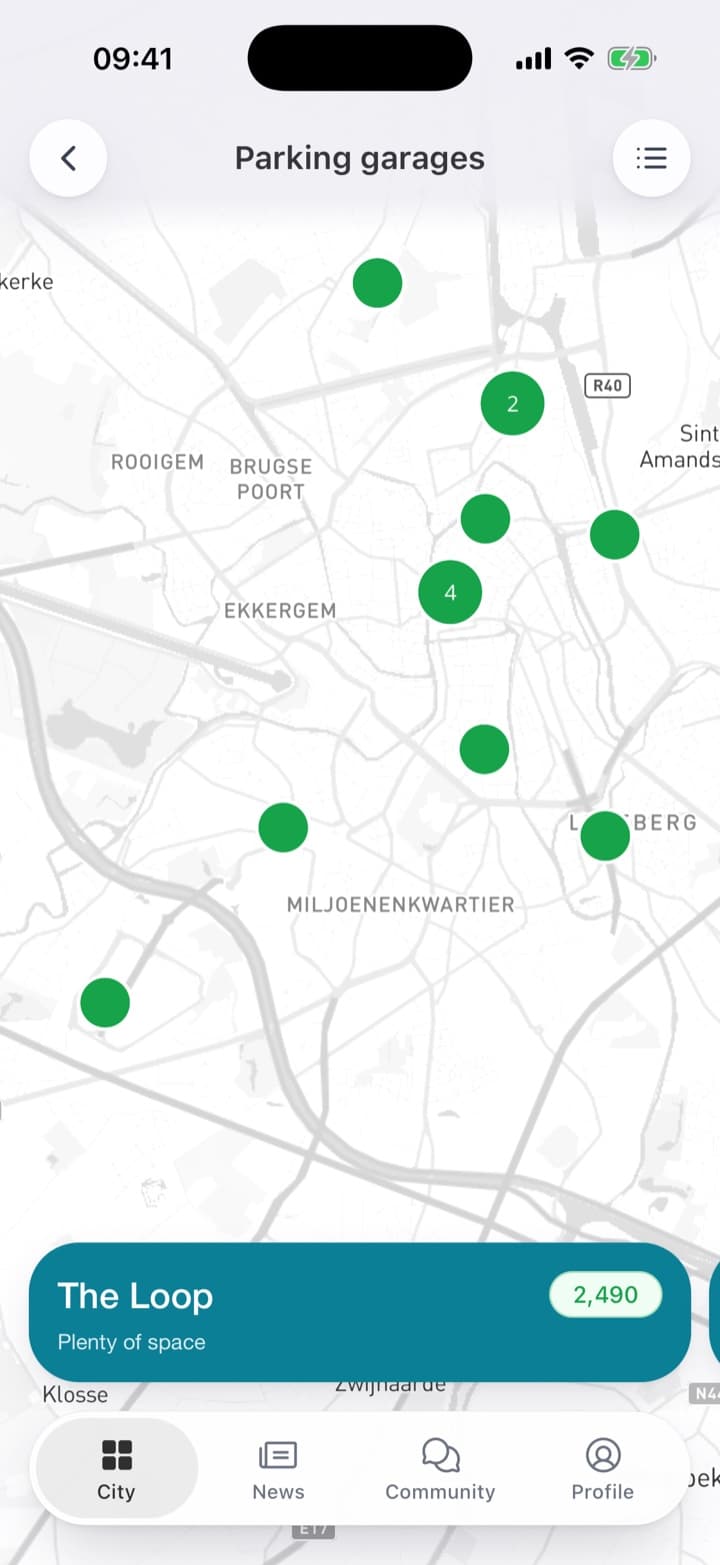
On the map, every car park is a pin. A tap shows how many spaces are free and a word that says what that means: plenty of space, few spaces, almost full. The colour never stands alone; the word is always next to it. So a glance at the map shows where in town there is room.
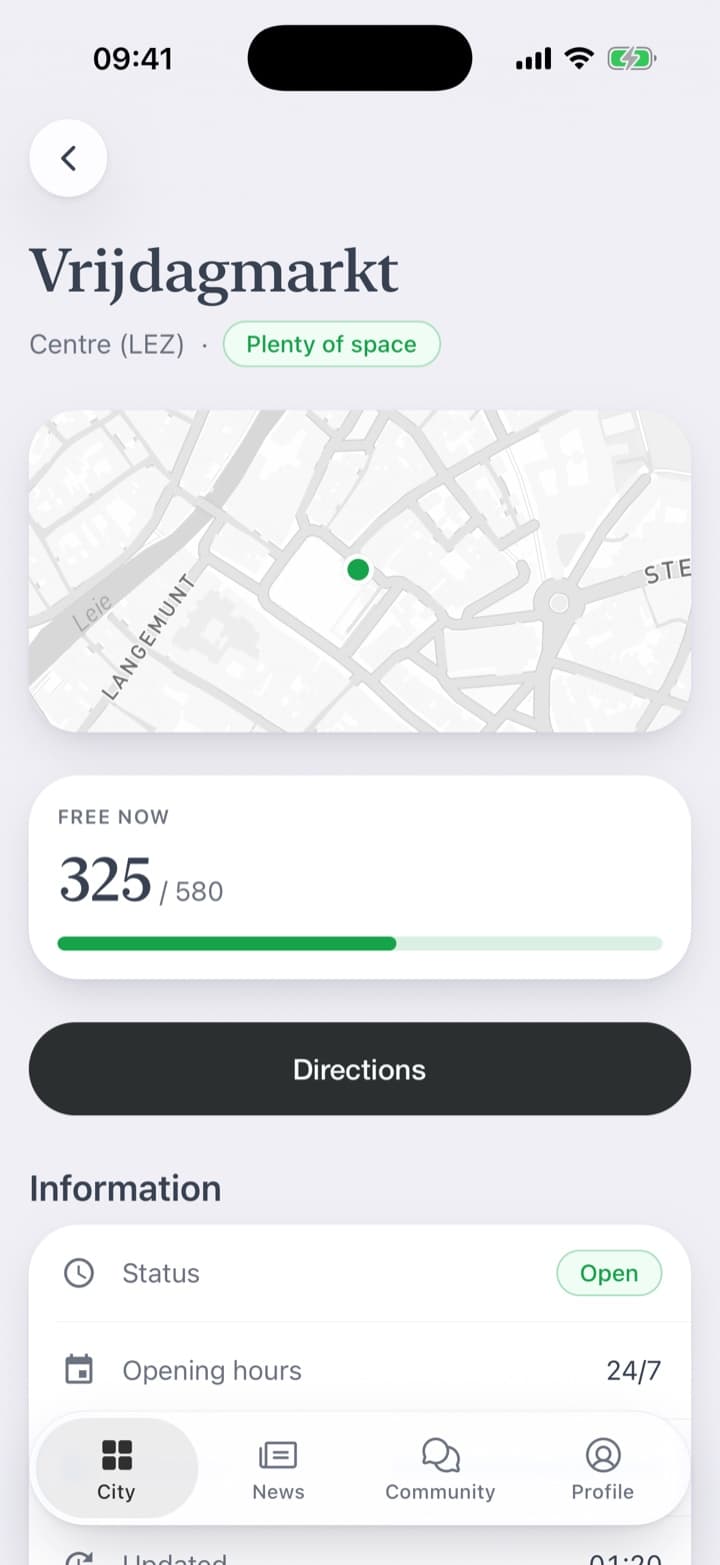
A car park's own page shows how many spaces are free now out of how many, whether it is open, its opening hours, and a button for directions.
What it takes
Car parks in town, and the decision that drivers should know where the room is before they set off. The city's staff take on no new work. A town with only two or three car parks gains just as much: the driver knows which one to aim for before leaving home, and the streets around the full one stay calmer.
Parking is a good example of a problem a city has already half solved. The spaces are there. What was missing was the moment: the driver needs the answer before leaving home, not at the barrier.