
When is my waste collected? One street, its schedule and a reminder the evening before
Every household asks the same question, and the answer depends on the street. Here is how a citizen gets it once and never has to look for it again.
Tomislav Krnic
Founder of the smart city project CityX · 3 min read
The bins stand in the yard. Is it paper this week, or mixed waste? Was the organic bin collected last Tuesday or the one before? Someone looks for the schedule on the fridge, someone else calls the city, and a third simply puts the wrong bin out and finds it still full in the evening.
The schedule exists. The city draws it up street by street, for the whole year. The trouble is that a citizen does not need the whole year for the whole town. They need one line: what goes out next from their own street.
The street is chosen once
The Waste pickup service in the CityX app starts with one question: which street do you live in? The citizen picks it from a list, once. A filter by settlement keeps the list short, because a city often reaches well beyond its centre, into the villages around it.
From then on, the tile on the home screen shows which waste is collected next from that street, and when. Each type of waste stands next to a short date, so the tile is read at a glance.
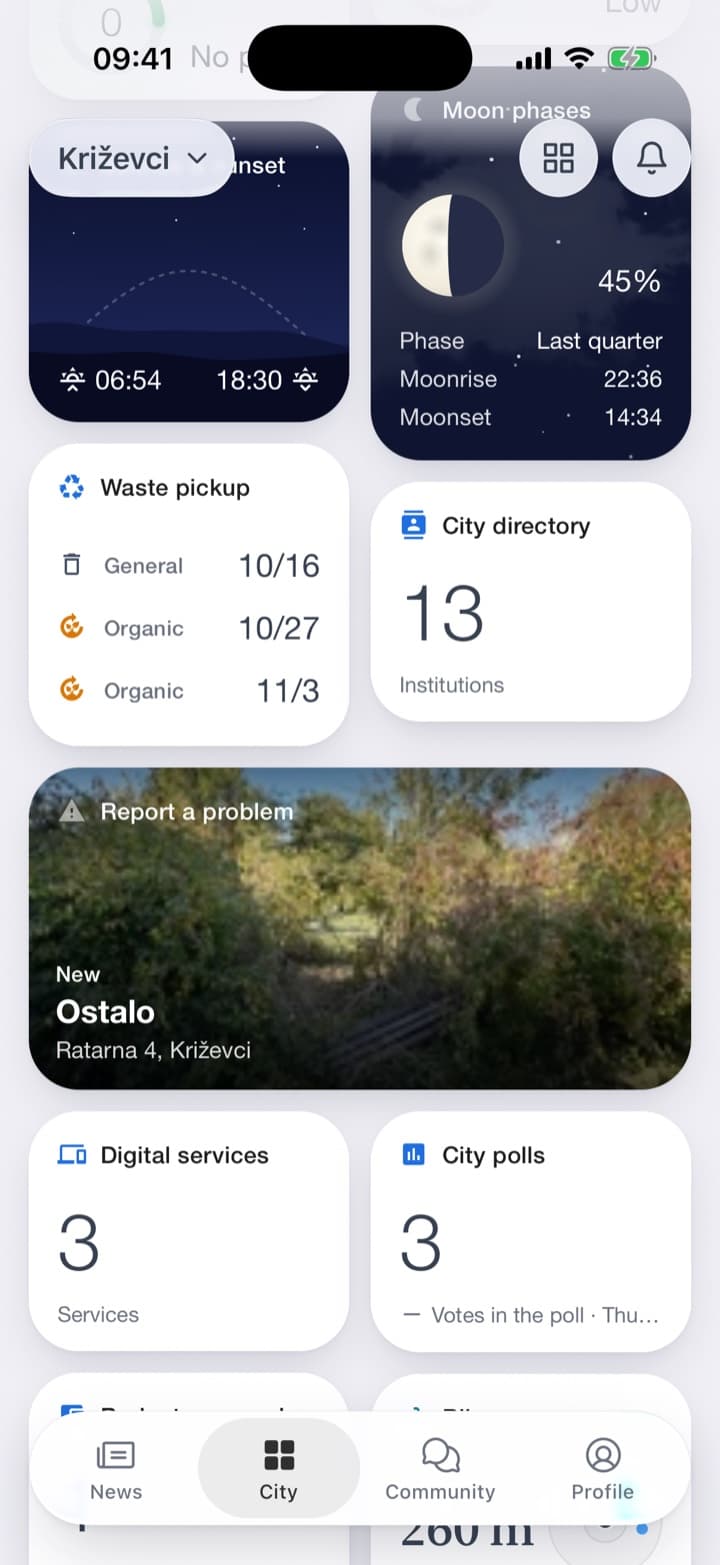
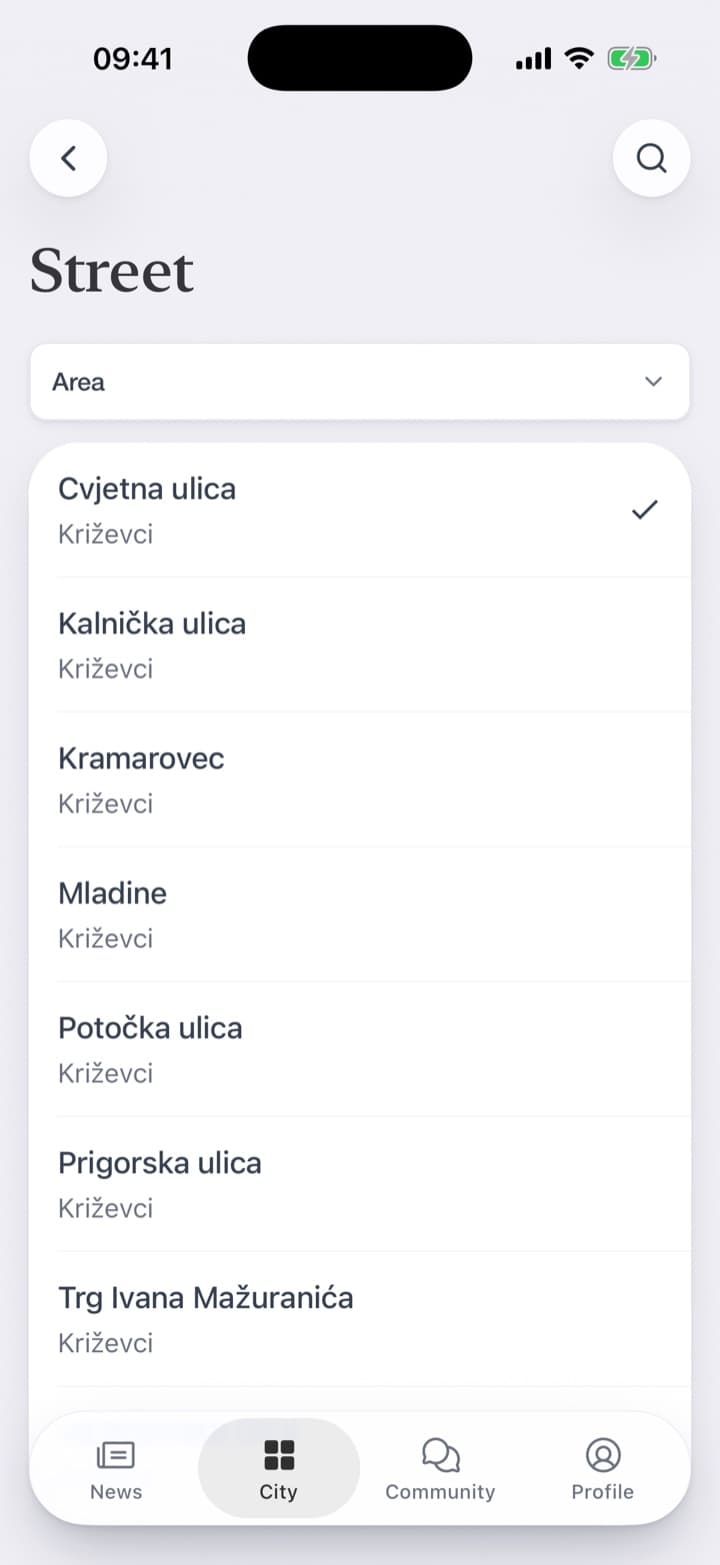
Nothing else is asked: no sign-up, no form, only the street.
One street's schedule, and a reminder
Behind the tile is the schedule for that street, month by month: mixed waste, organic waste, paper, each listed under the month in which it is collected. It is the same schedule the city draws up, cut down to what concerns this one household.
The more useful part is the reminder. The evening before a collection, at 17:00, the phone says what goes out tomorrow. That is the moment when the bin is still in the yard and there is time to take it out. The reminder comes only for the street the citizen chose, so nobody gets another street's collection.
The reminder is on from the start and can be switched off in the same place where the street is changed. Someone who moves house changes the street, and from then on the schedule and the reminder follow the new address.
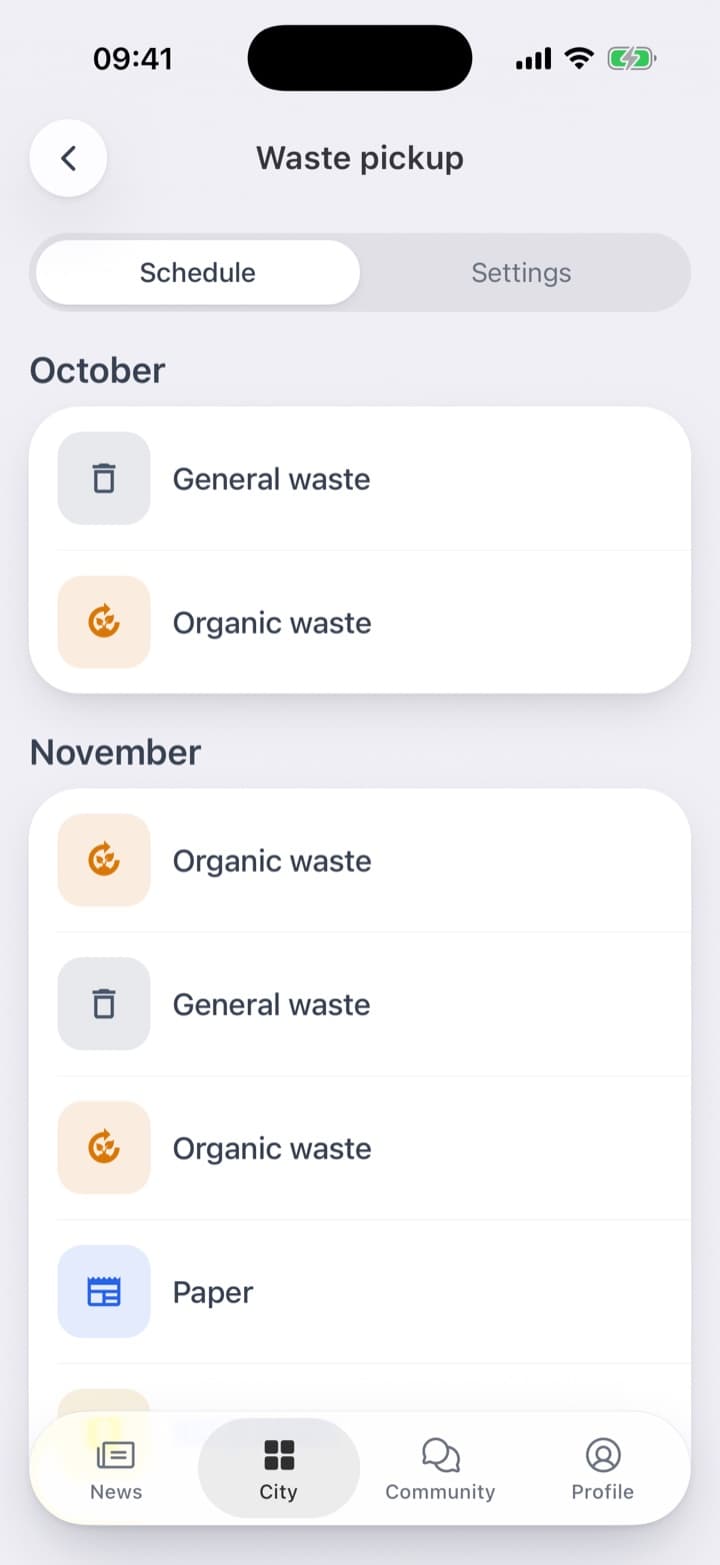
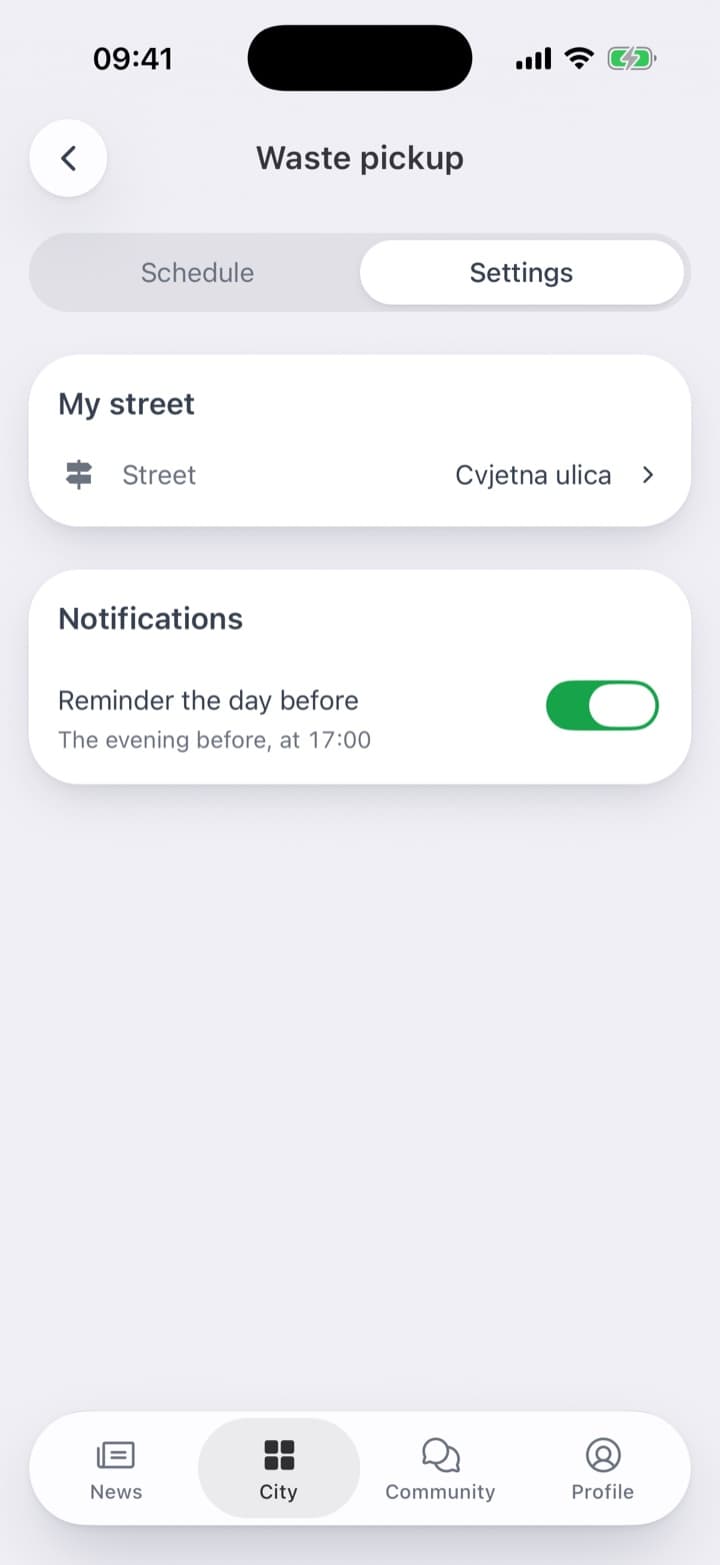
Everyone in a household can choose the same street on their own phone, so taking the bins out no longer depends on who happened to remember.
What it takes
A collection schedule by street, the one the city already draws up every year. Nobody at the city has to work differently: the schedule it already has simply finds its way to every household.
When a public holiday moves a collection, the city changes the date once, and citizens see the change in the app, without a new leaflet.
It is a small service. But every household has the question every week, and the answer has always existed. It only had to reach the right street.