
Is this warning real? A warning in the city's name, to everyone at once
A water cut, a storm, a closed road. Warnings travel from neighbour to neighbour and over social media, often late and sometimes wrong. Here is how a city sends its own, from one place, to everyone.
Tomislav Krnic
Founder of the smart city project CityX · 3 min read
One evening a message goes round the neighbourhood: no water tomorrow. Who said so? Until when? Which street? Someone forwards a screenshot, someone else says that was last week. By the morning, half the street has filled bottles and the other half has not heard a thing.
The city knew all along. What was missing was a way to reach every citizen at once, with a message they could trust.
One warning, in the city's name
In the CityX app, warnings reach citizens through the Heads-up service. While a warning is in force, it stands at the top of the home screen, above everything else: what is happening, until when, and what to do.
The warning reaches everyone who has the city in the app, at the same moment. Nobody has to switch anything on. At night, a minor notice waits until the morning; a serious warning does not wait.
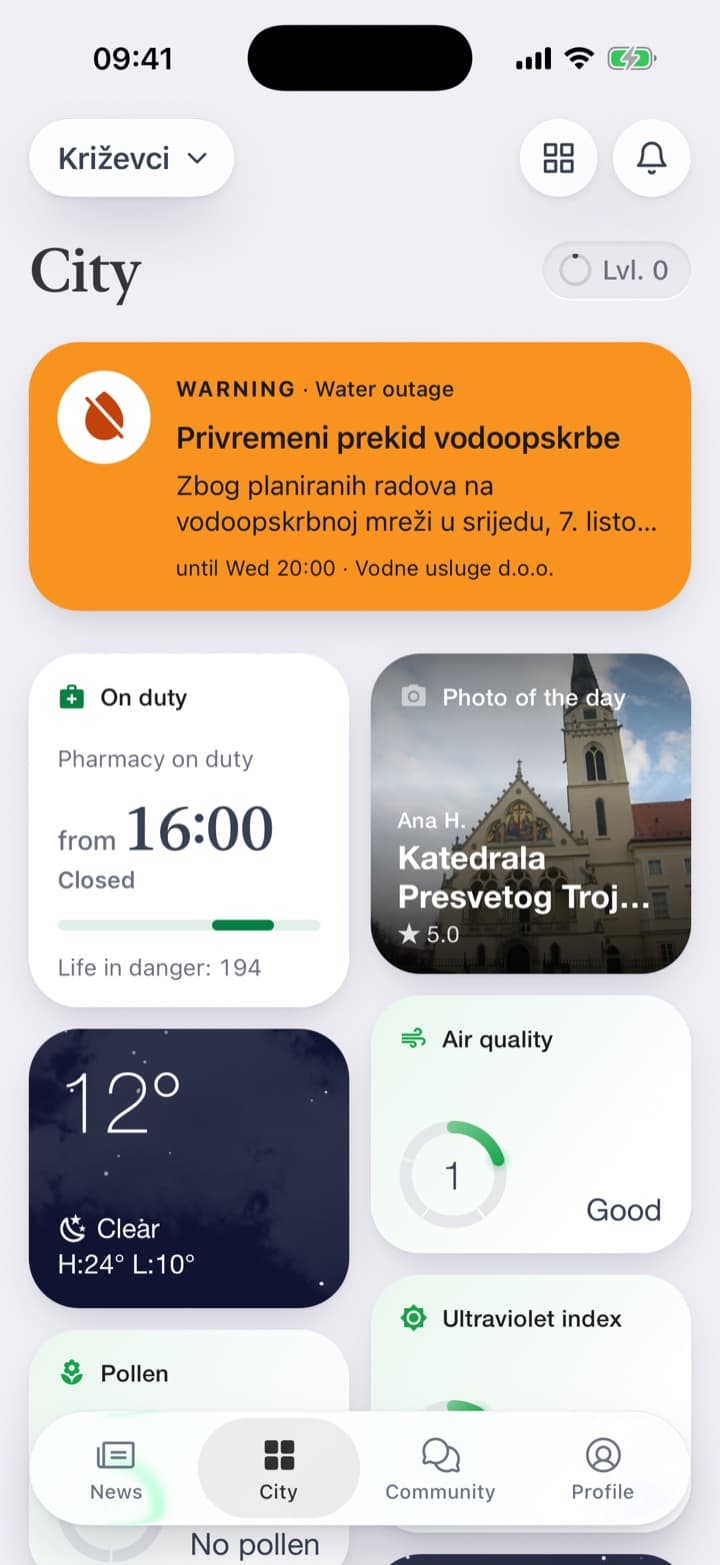
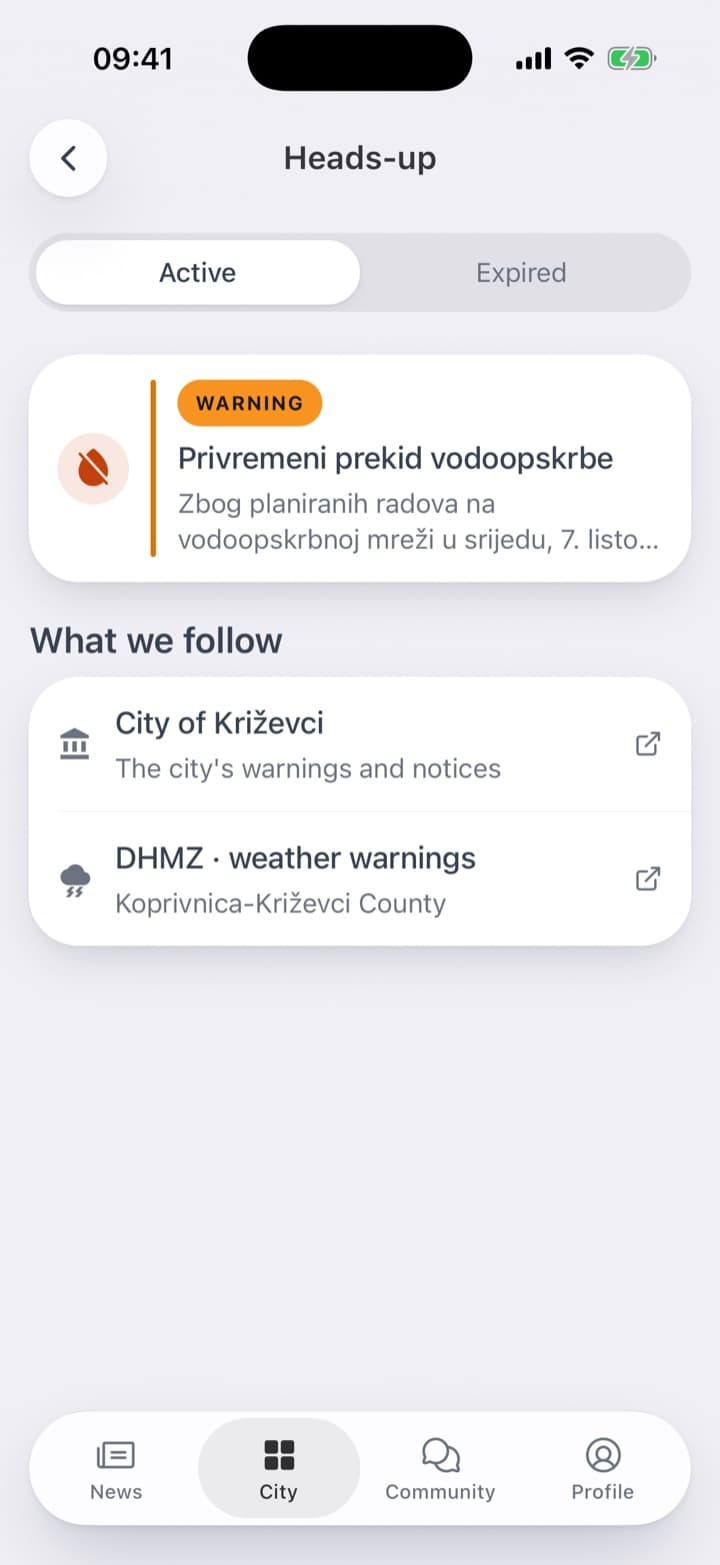
Under the warnings, the page says plainly which kinds of warning it carries: the city's own, and weather warnings for the area. When the list is empty, a citizen knows that nothing is wrong, and so can trust the silence too.
Everything a citizen needs, on one screen
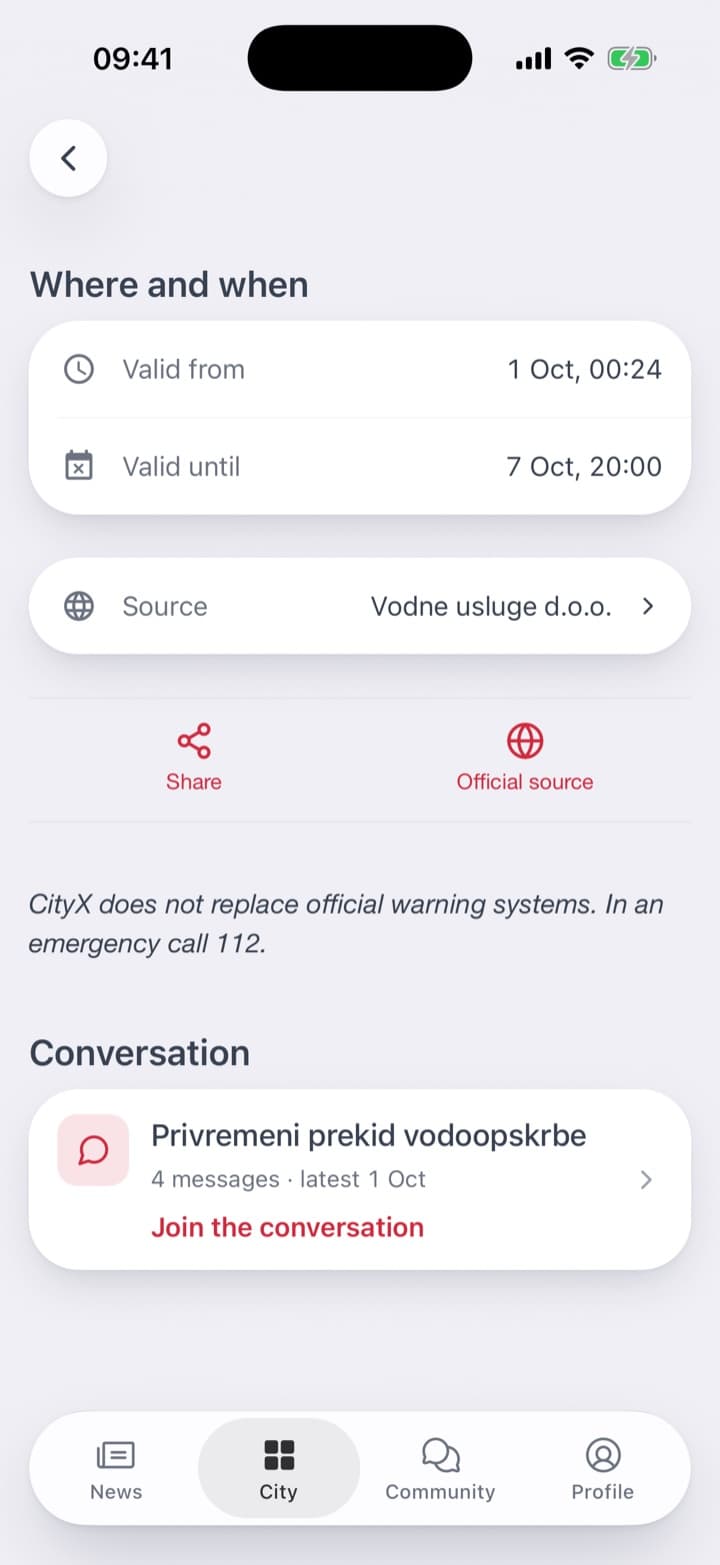
An opened warning says where and when it applies, and in plain words what is happening and what to do. Below it is a button to share it with a neighbour who does not have the app yet.
Every warning also has its own conversation, where neighbours ask and answer: is our street affected too, is the water back yet?
Sent from a simple web page
Someone at the city writes a warning on a simple web page: a headline, what to do, until when it applies and how serious it is. Before sending, they see it as it will look on a phone. Every send asks them to confirm they may issue it on the city's behalf, and every send is recorded.
When the danger is over, the city says so too, in a message of its own, so nobody is still filling bottles a day after the water has come back.
What it takes
Someone at the city who is allowed to issue warnings, and a few minutes to write one. Nothing has to be installed. Weather warnings for the area appear on their own, without anyone at the city lifting a finger.
The national warning systems and the emergency number keep their role. Next to them, the city gains its own voice for what it knows first: a water cut, a closed road, a change to tomorrow's plans. It is a good place to start, because the first warning that arrives in time teaches every citizen where the city speaks.