
Which bike is nearest, and what will the ride cost? Every operator in one place
Shared bikes stand on every corner, but each operator lives in its own app. Here is how the city's app shows the nearest bike of every operator and its price, and opens the right app in one tap.
Tomislav Krnic
Founder of the smart city project CityX · 3 min read
Someone steps out of a shop in the centre and wants to be at the station in ten minutes. There are shared bikes all around, from three operators. Each operator has its own app, and the person has one of them on the phone, maybe two.
So they open the one app they have and walk to that operator's bike, while a cheaper one may be standing round the corner. What the ride costs, they find out when it is over.
The nearest bike, whoever owns it
The Bikes service in the CityX app puts every operator on one tile. At the top is the nearest bike and how far away it is; under it, the nearest bike of every other operator, with the price of a short ride. The person sees at a glance whether their own operator is close, or whether another one is closer and cheaper.
On the map, every operator has its colour and its name, and a tap on a name leaves only that operator's bikes. A tap on a pin shows what stands there: how many bikes, how much battery an e-bike has left, how far it will go, and what the ride costs.
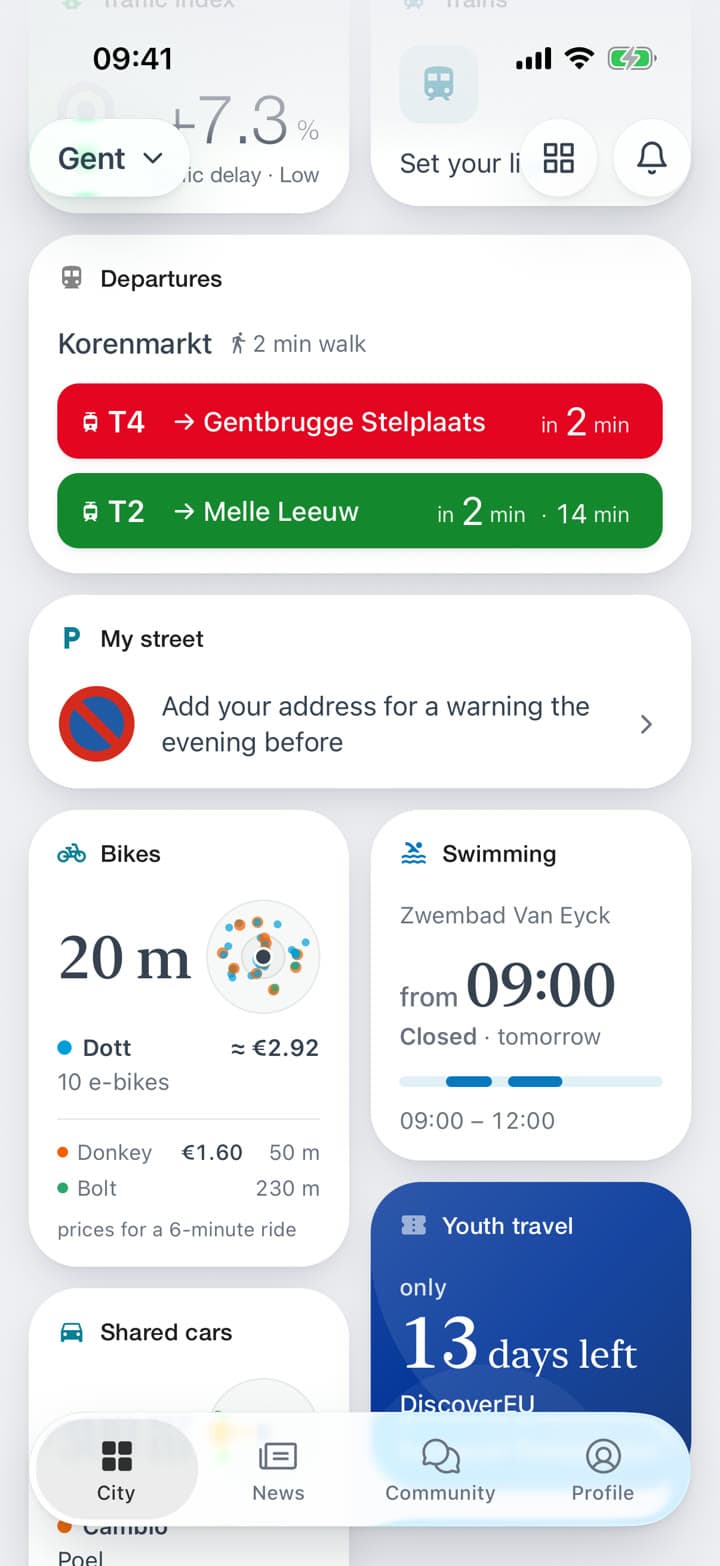
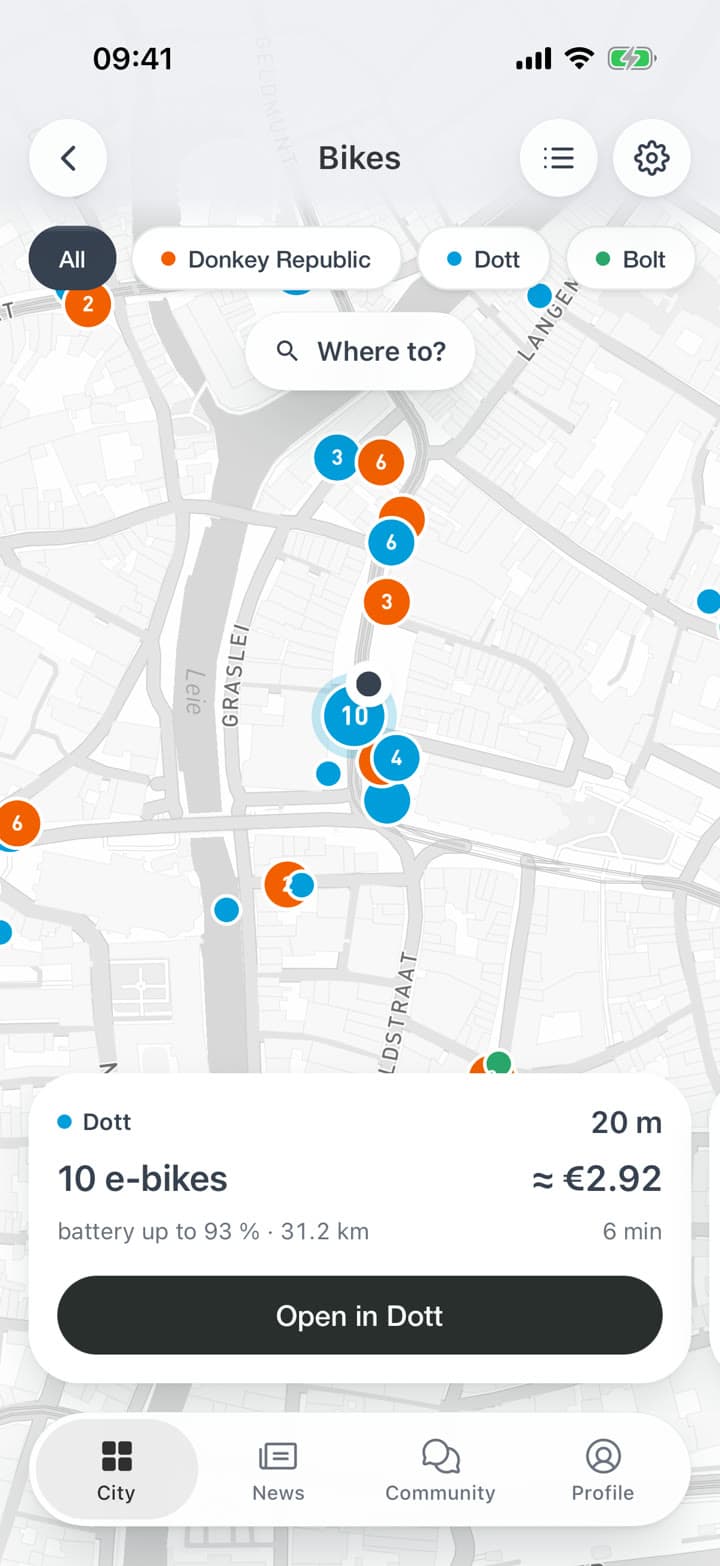
The price is what that ride costs with that operator, shown before it starts. On one corner of the centre, the screen shows an e-bike 20 metres away at about €2.92 and an ordinary bike 50 metres away at €1.60.
One tap to the bike
The list is sorted by what the person cares about, nearest or cheapest, as they choose. Bikes are grouped by walking time, so it is clear what is two minutes away.
The button on every bike opens the operator's own app on that bike, ready to unlock. Payment, the account and the ride stay with the operator. Whoever does not have that app yet is taken to the store to get it.
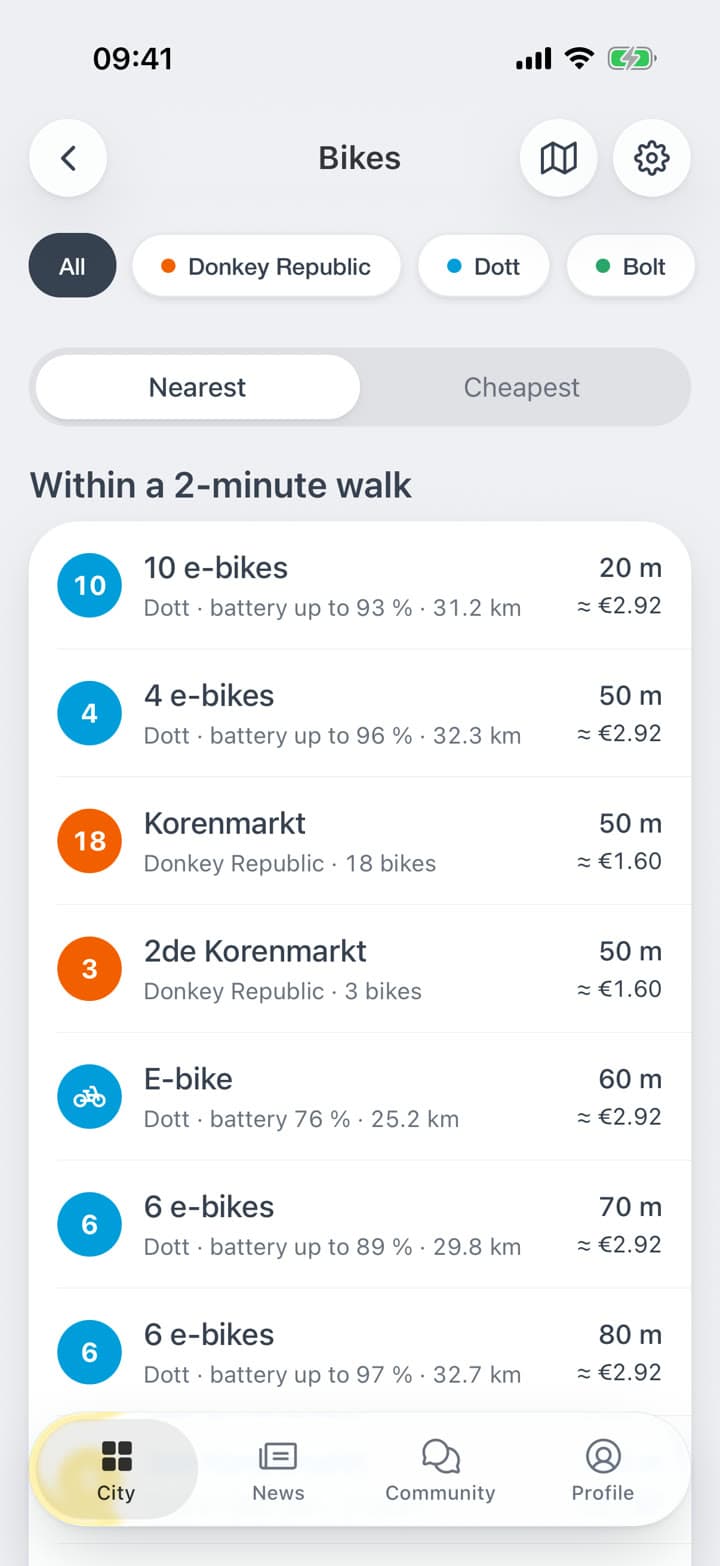
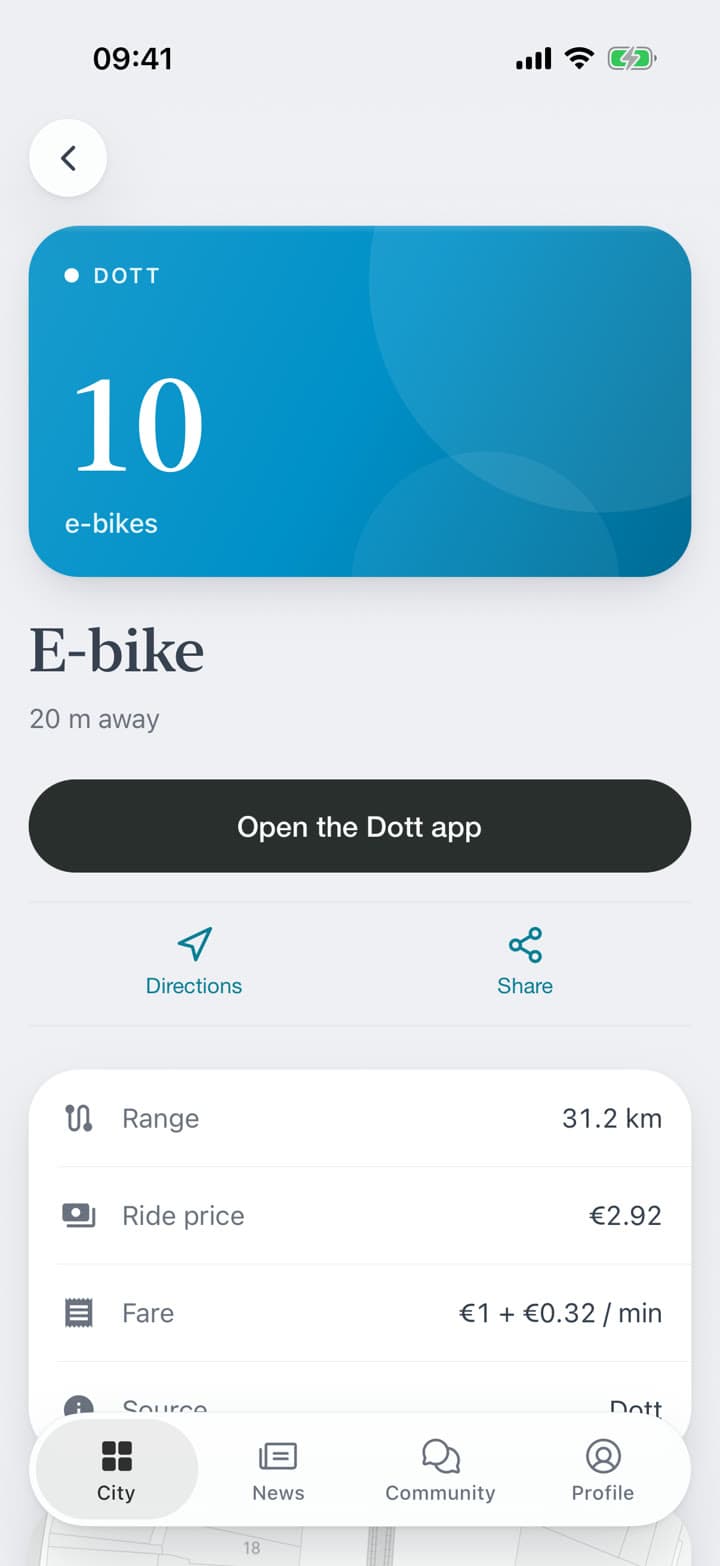
For a longer trip, "Where to?" gives the price of that ride with each operator.
What it takes
Shared bikes in the streets. A town with one operator and fixed stations works the same way: the tile then shows the nearest station and how many bikes stand on it.
The city has nothing to build or maintain. It decides one thing: that its residents should see every bike in the street, not only the one whose app they happen to have. The short trip is where a bike beats the car most easily, so it is where the city gains first.