
Reporting a fault in the city: a photo, a point on the map, done
A pothole, a street light that is out, an illegal dump. Citizens see it first. The only question is how hard it is for them to tell the city.
Tomislav Krnic
Founder of the smart city project CityX · 3 min read
A street light has been out for a week. Ten people walk past it every day and all think the same thing: someone must have reported it by now. Nobody has.
When someone does decide to, the search begins: which number to call, who is responsible, whether the office is open. Some give up, some post about it on social media. The city hears about the fault late or not at all, and when it does, it arrives in a form it cannot work with: no exact place and no photo.
Three steps instead of a phone call
In the CityX app, a citizen reports a fault in three parts: a photo, a point on the map and a short description. Nothing else is asked, and the whole thing takes less time than finding the right phone number.
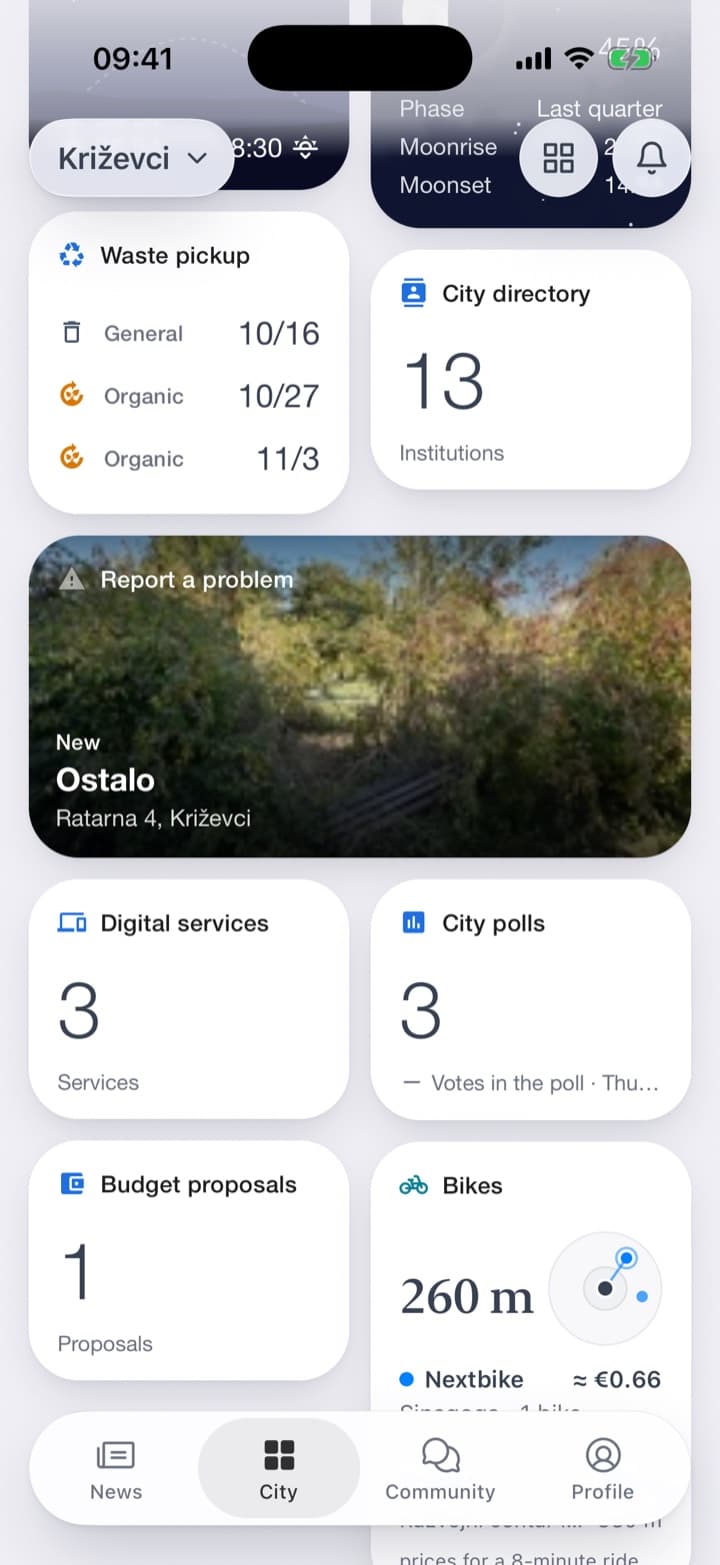
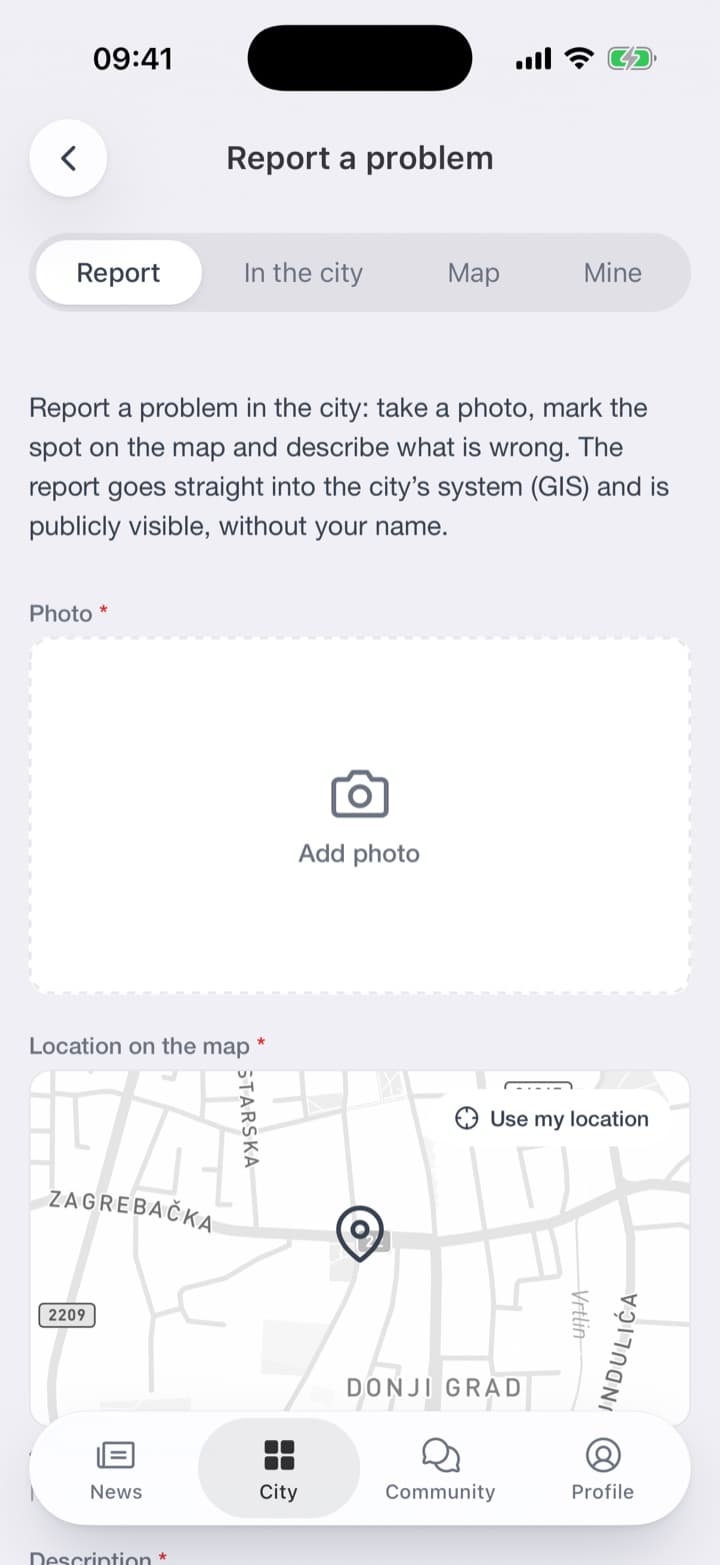
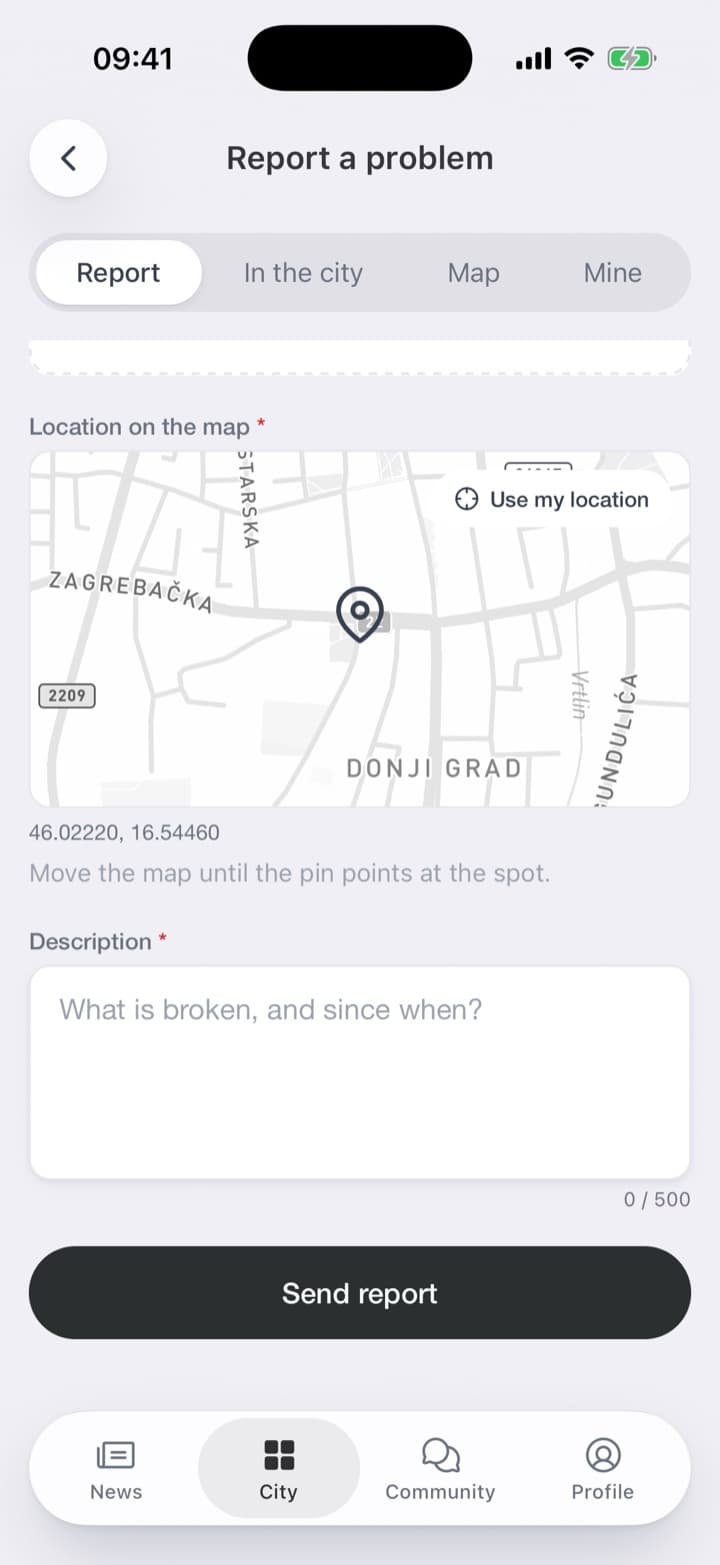
The point on the map matters more than it seems. "By the old school" means something only to those who know where the old school is. A point on the map means the same to everyone, the city warden and the contractor alike.
The report lands where the city already works
The report does not end up in an inbox that somebody has to read and copy out. It reaches the people at the city who look after streets and lights, with its photo and its place, ready to act on. When the city moves it on, the person who sent it hears about it on their phone, and under My reports they can always see where each of their reports stands.
Everyone sees what has been reported
Reports are public, without the name of the person who sent them. Anyone can see the list and the map of what has been reported in the city and what state it is in: a new report, or being resolved.
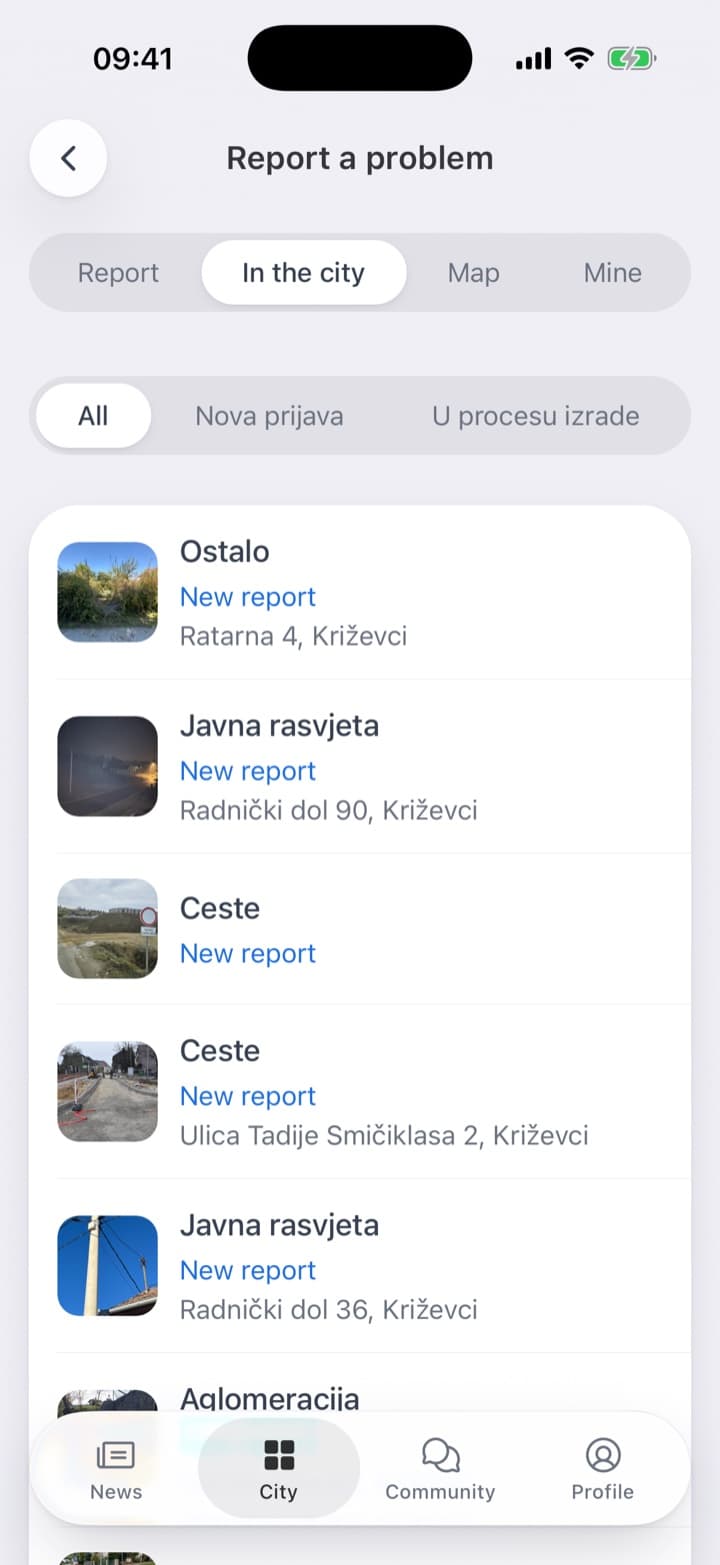
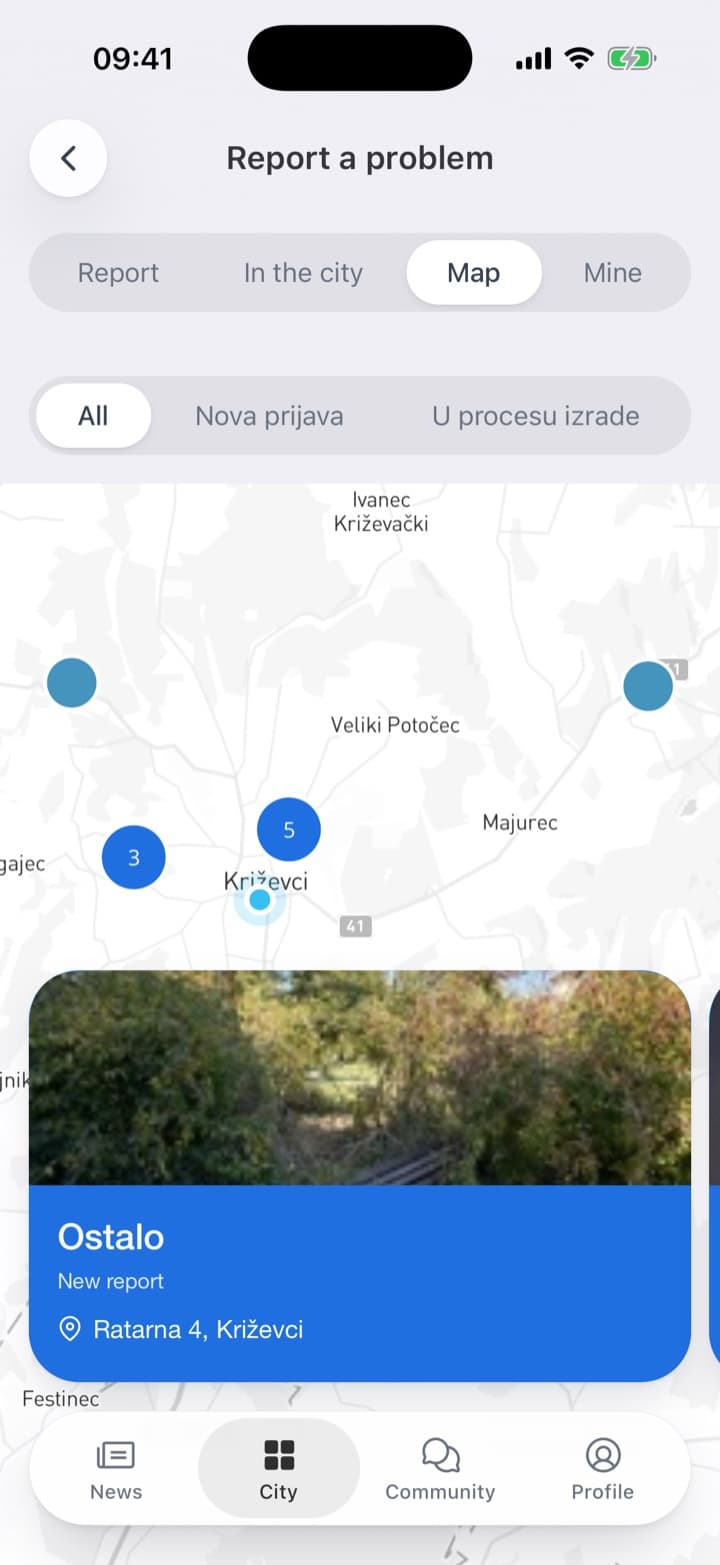
That changes two things. A citizen who sees the pothole is already reported does not report it again. And a citizen who sees their report move to "being resolved" knows somebody heard them. Neighbours can also start a conversation about a report, so a problem that bothers a whole street gets the weight it deserves.
What it takes
A service at the city that looks after streets, lights and green spaces, and people there who take a report and move it on. Citizens' reports join the work they already do, and nobody keeps a second list. A city that does not have such a list yet gets one with the service: its staff see every report on a simple web page and move it on from there.
Faults are a good place to start. Every citizen sees them, and every one that is repaired is visible proof that the city listens.