
How does a city hear what its citizens want? A poll, a proposal and a vote
A city that wants to ask its citizens something usually ends up with a public consultation few people find. Here is how the question reaches them, and how their own ideas reach the city.
Tomislav Krnic
Founder of the smart city project CityX · 3 min read
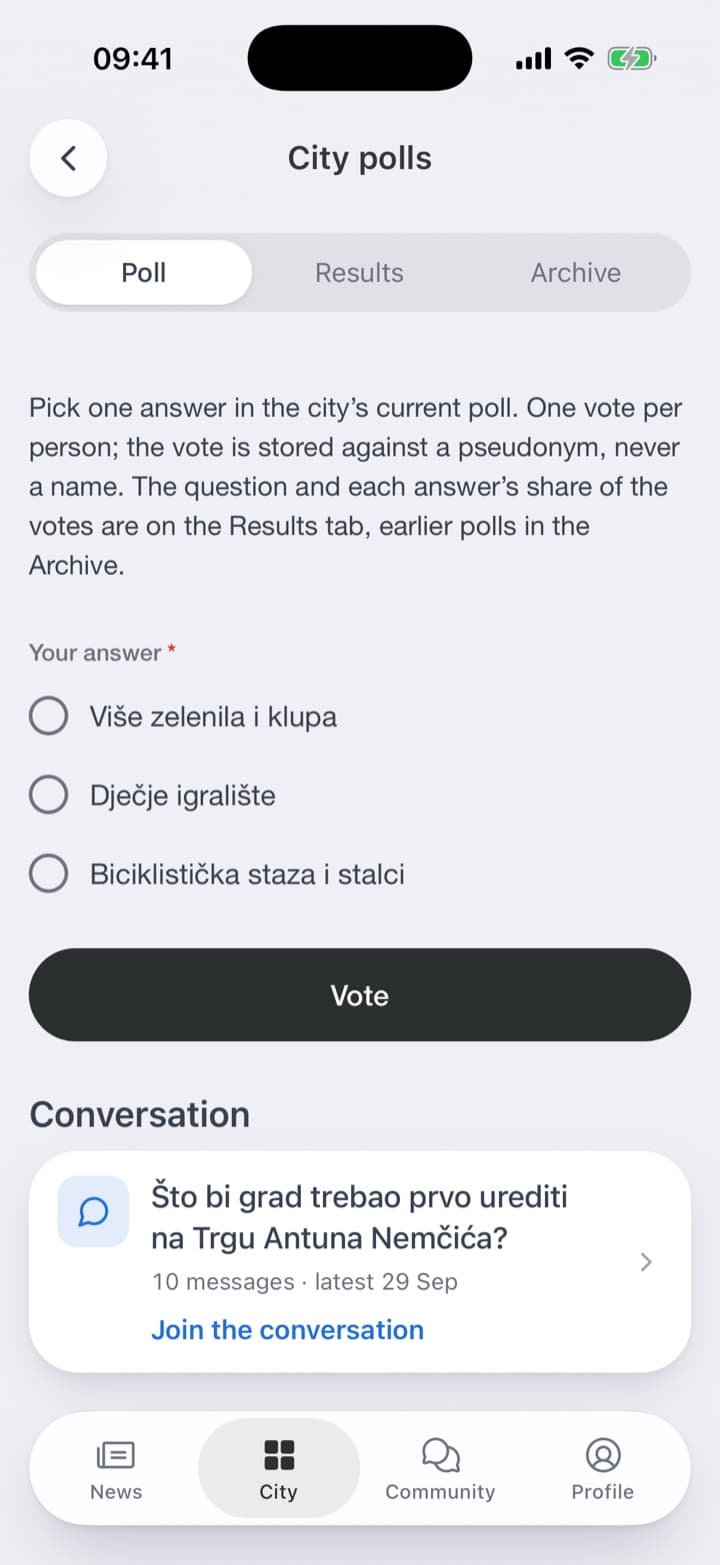
The city wants to redo a square and has to choose: more greenery and benches, a playground, or a cycle lane with bike racks. It could hold a public consultation, put a notice on its website and wait. The same few people would answer, as they always do.
Most citizens have an opinion. What they lack is a simple way to give it, and a sign that anyone is listening.
The city asks, citizens answer
The City polls service puts the city's current question on citizens' phones. A citizen picks one of a few answers and votes: one vote per person, and the vote is never tied to a name. The city sets how long a poll runs; when it ends, voting closes and the results stay.
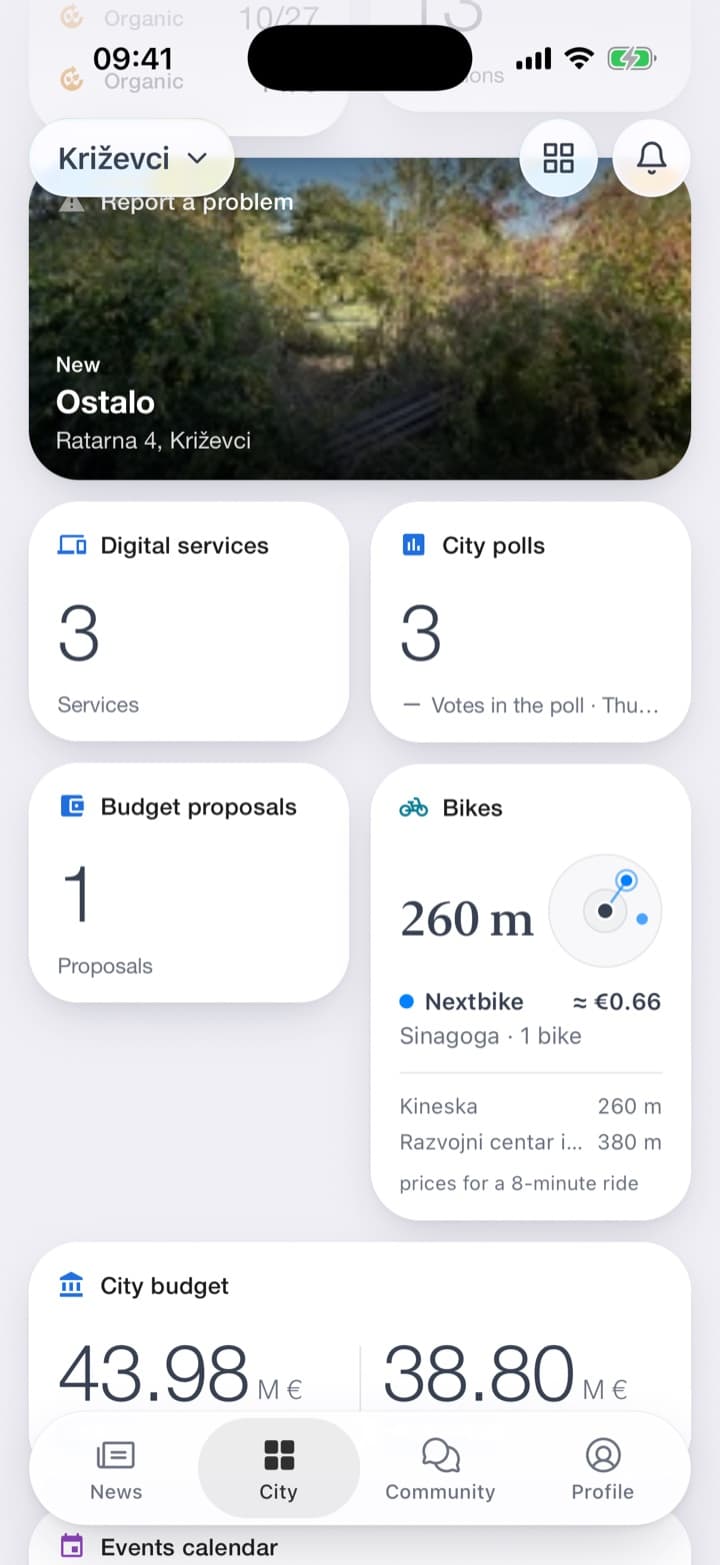
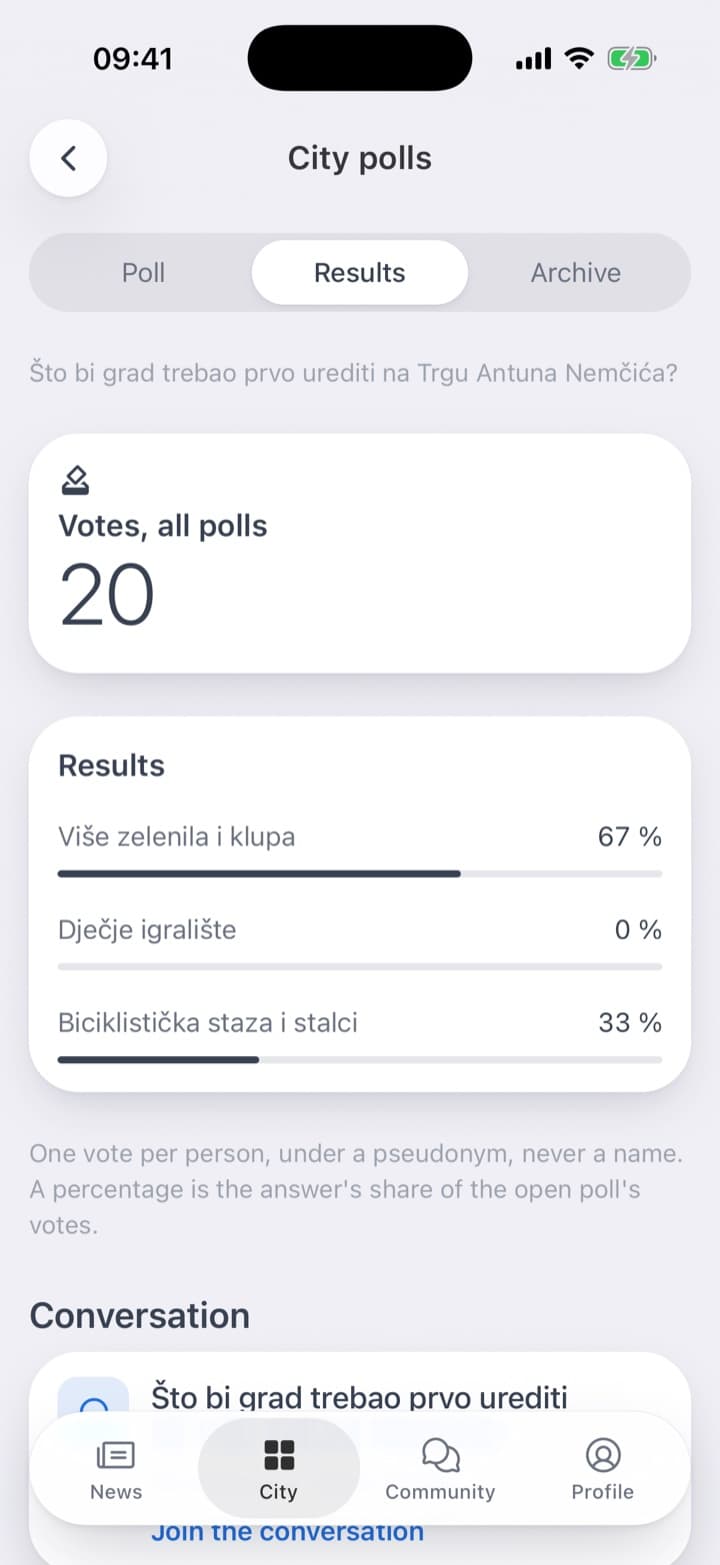
Earlier polls stay in an archive with their results, so anyone can see what the city asked before.
Every new poll also opens a conversation in the app's community, where citizens can say why they voted as they did. The percentages tell the city what people prefer. The conversation is often where it learns why.
Citizens propose, the city decides
The second service turns the direction around. With Budget proposals a citizen suggests what the city should spend part of its budget on. A proposal has a title, a short explanation, an area such as roads or parks, an estimated amount and, if the author wishes, what to cut to pay for it.
A proposal does not go public at once. The city reviews it first and puts it on the public list without the author's name; until then only the author sees it, under My proposals. When the city makes it public or turns it down, the author gets a notification, and can always see where the proposal stands: received, public or not accepted.
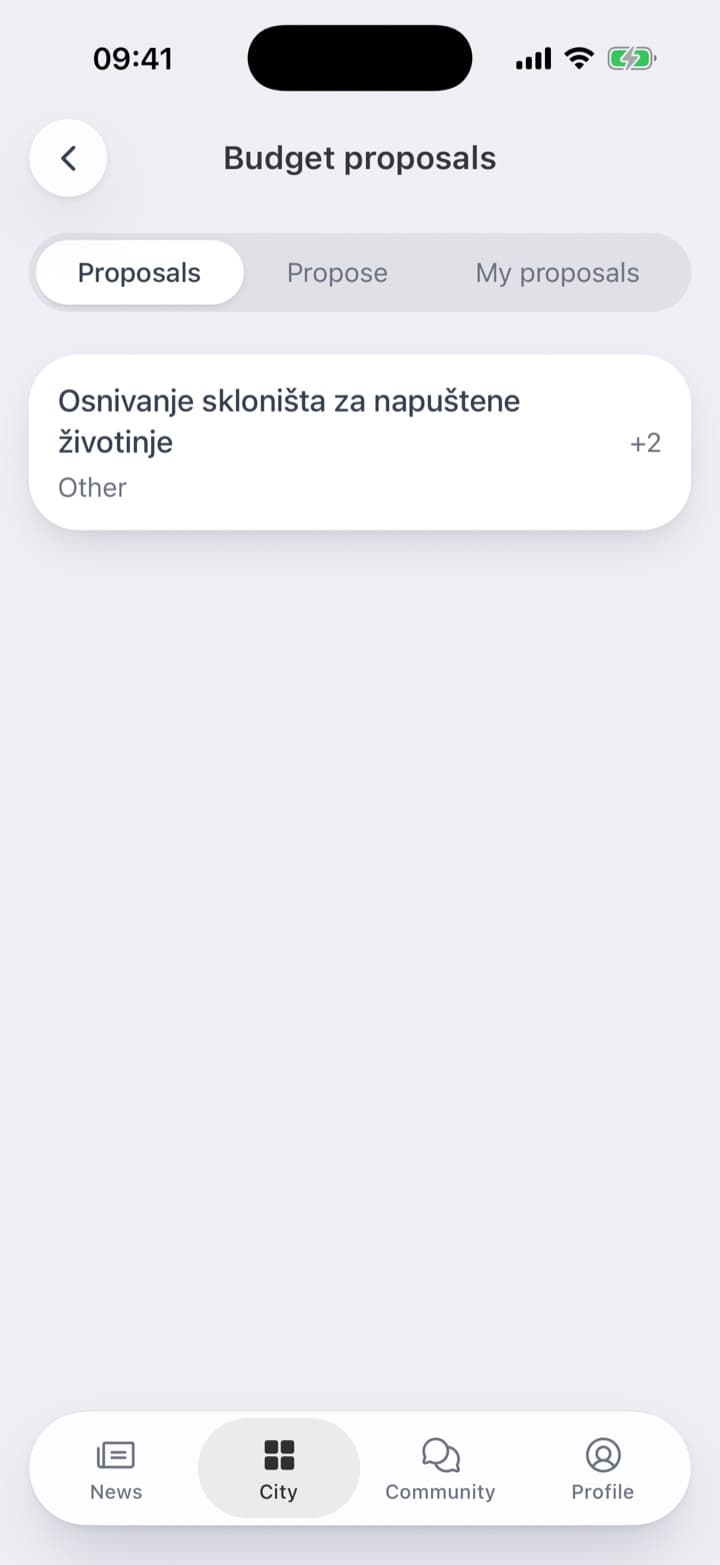
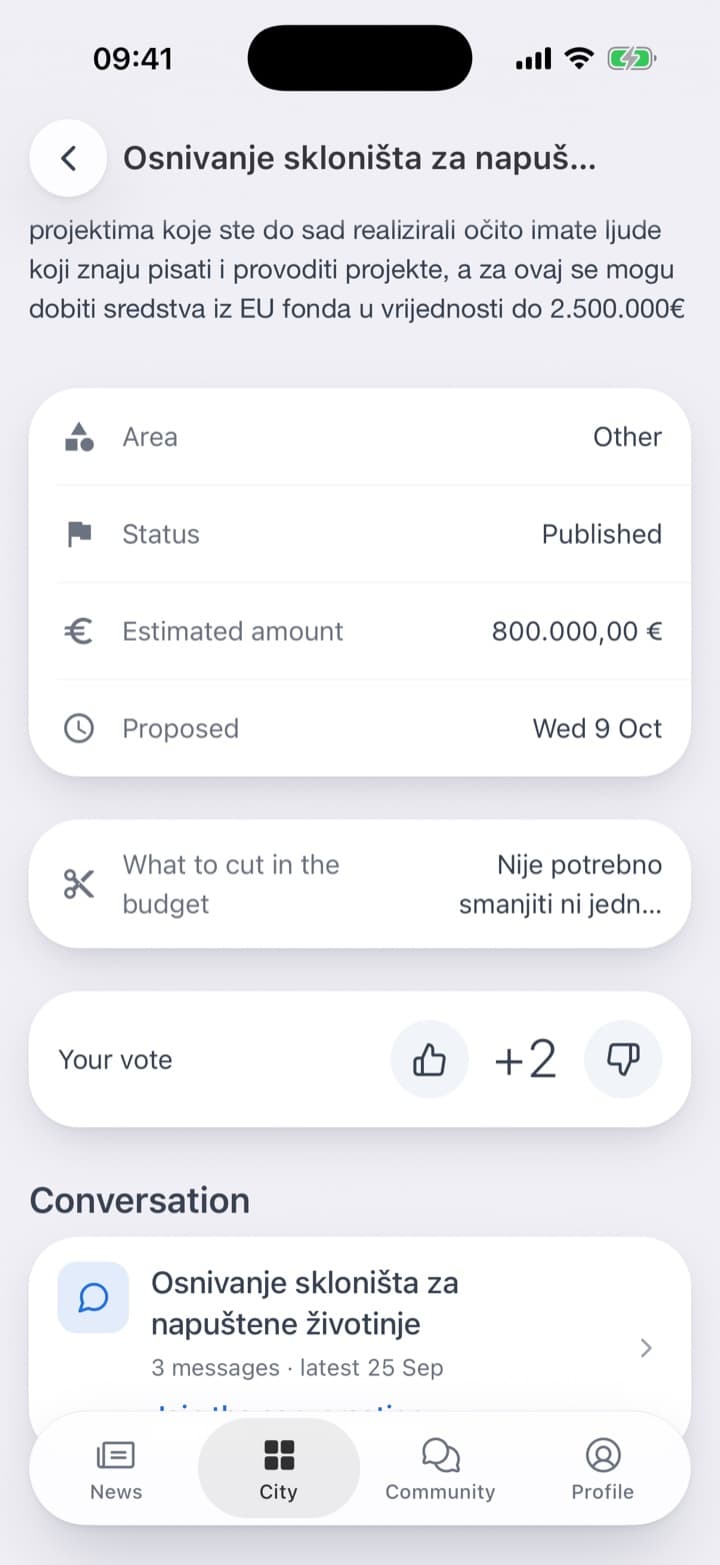
Once a proposal is public, other citizens vote for or against it, and the list is ordered by the balance of votes. The city sees which proposals its citizens care about, and why, in the conversation under each one.
For many citizens it is the first time the city has asked rather than told. Someone who has voted once votes again, and may one day propose something themselves.
What it takes
A question the city really wants answered, and someone at the city hall who reviews the proposals. The city writes its own polls and decides on the proposals itself; there is nothing to install or build.
The part that matters most is answering. A city that asks has to show what it did with the answers: which proposal made it into the budget, what happened to the square. That is what makes people vote the next time.